Category: Music

  • Our trip was a deep-dive into the city rising electronic music subculture. It had me reflecting on micro-economics, being passionate about ones undertakings and my own musical journey.

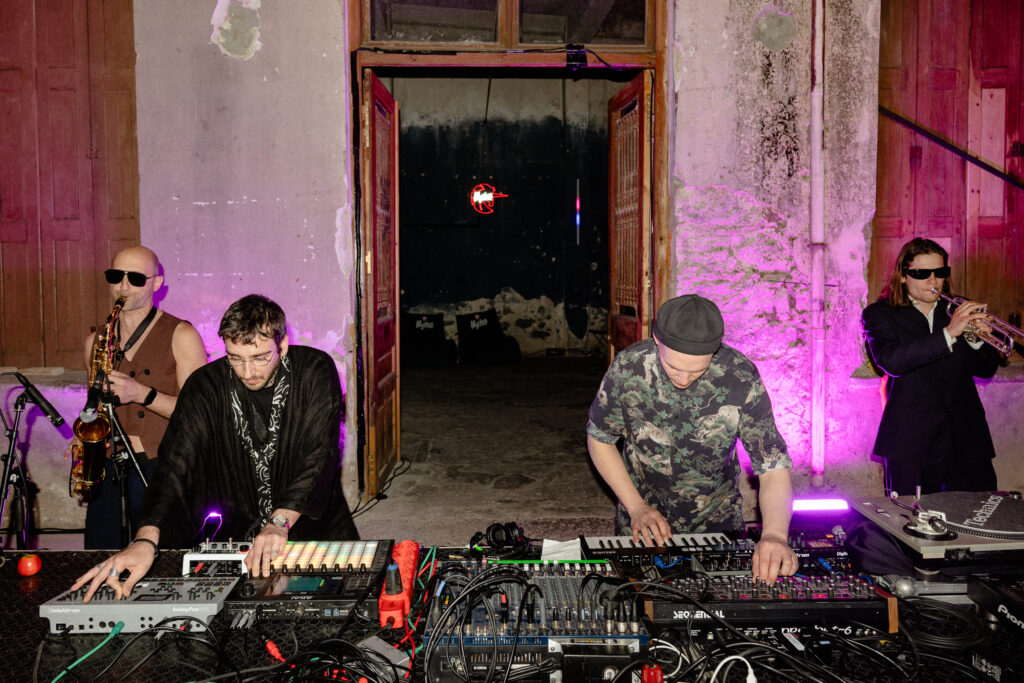
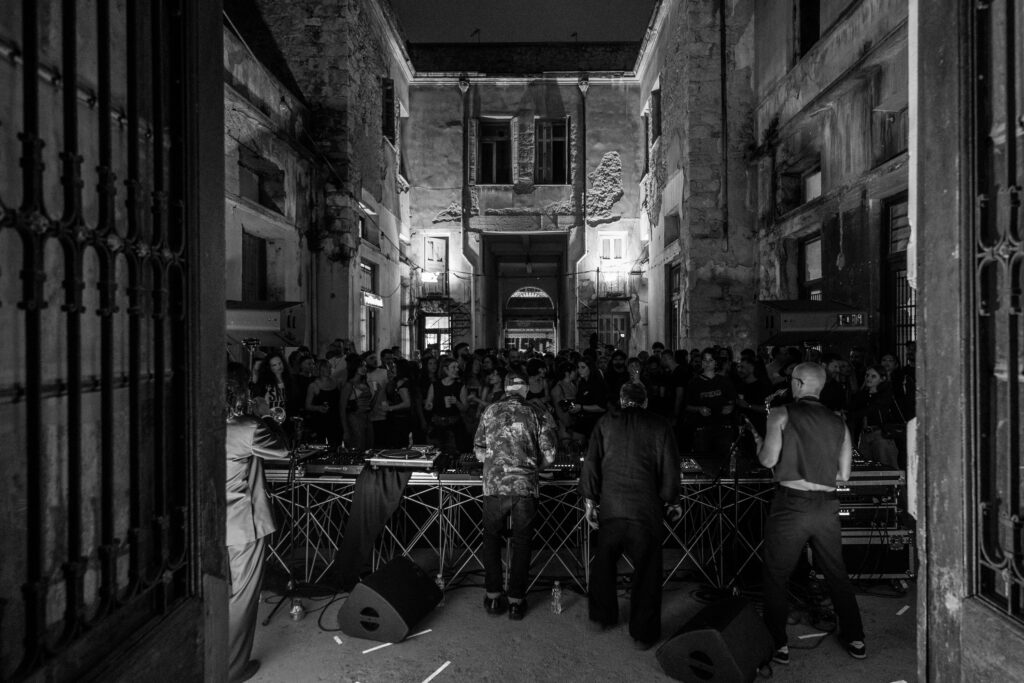
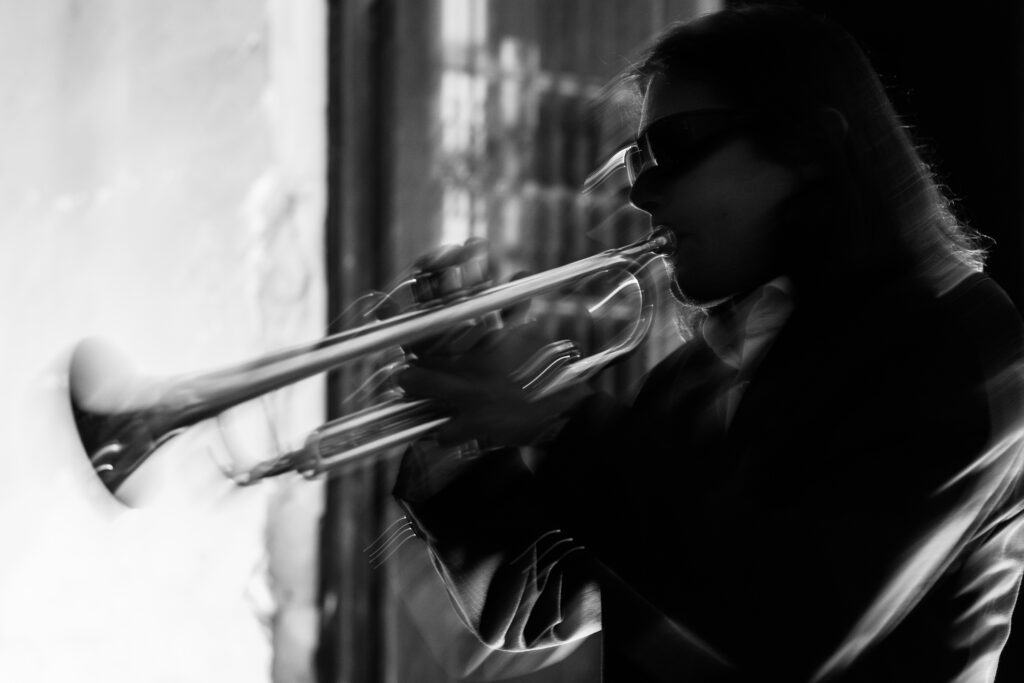
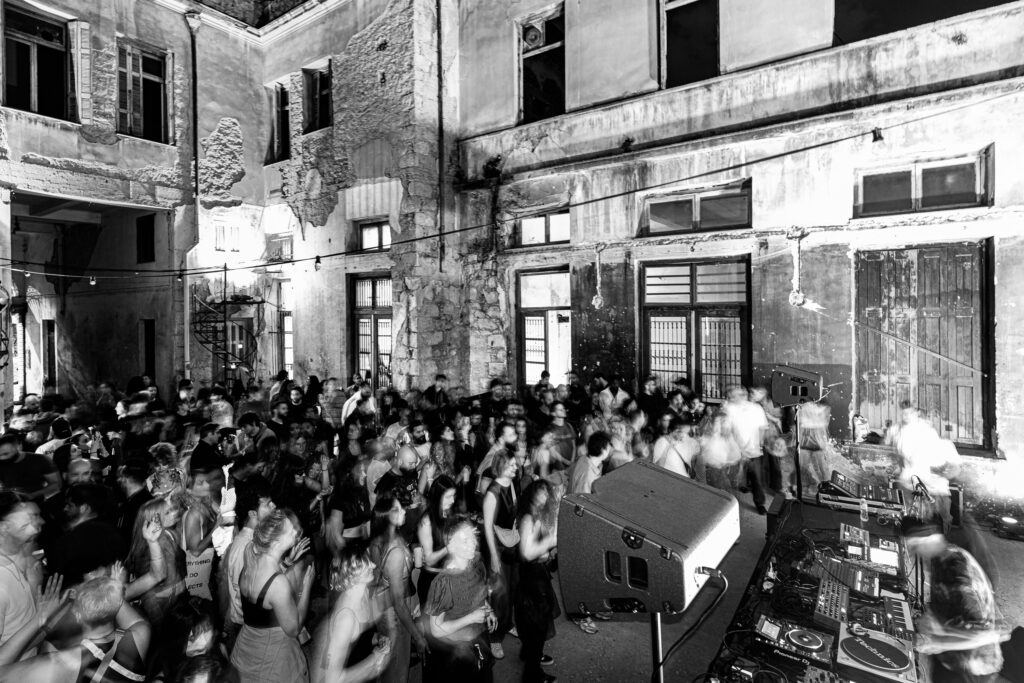
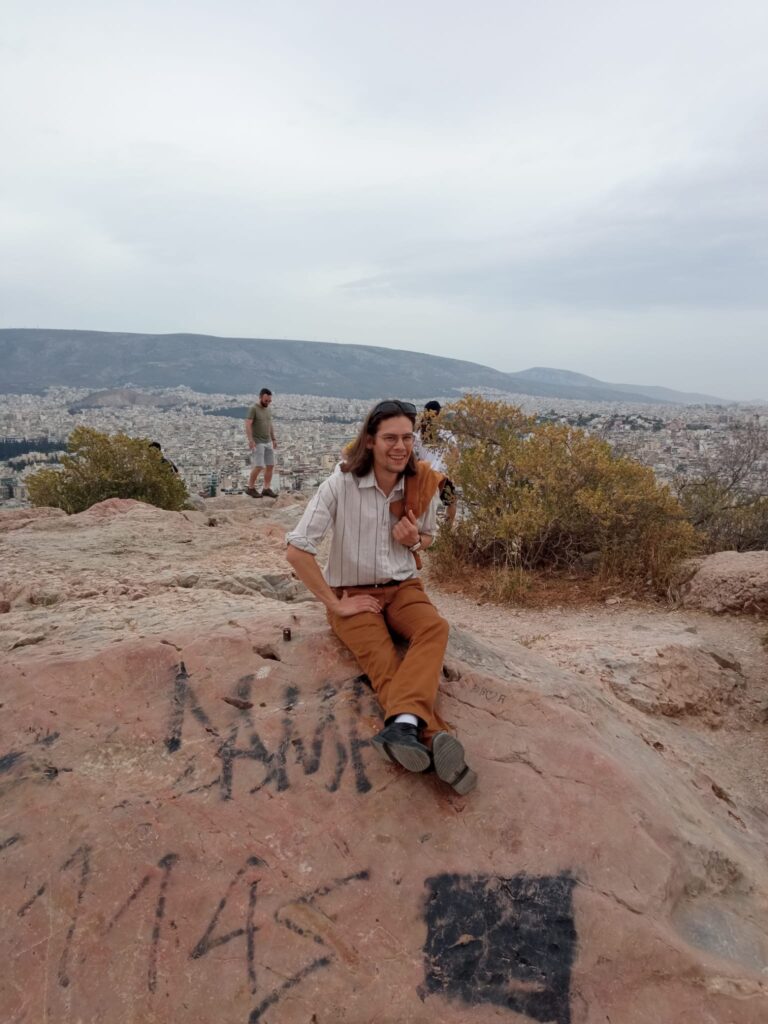
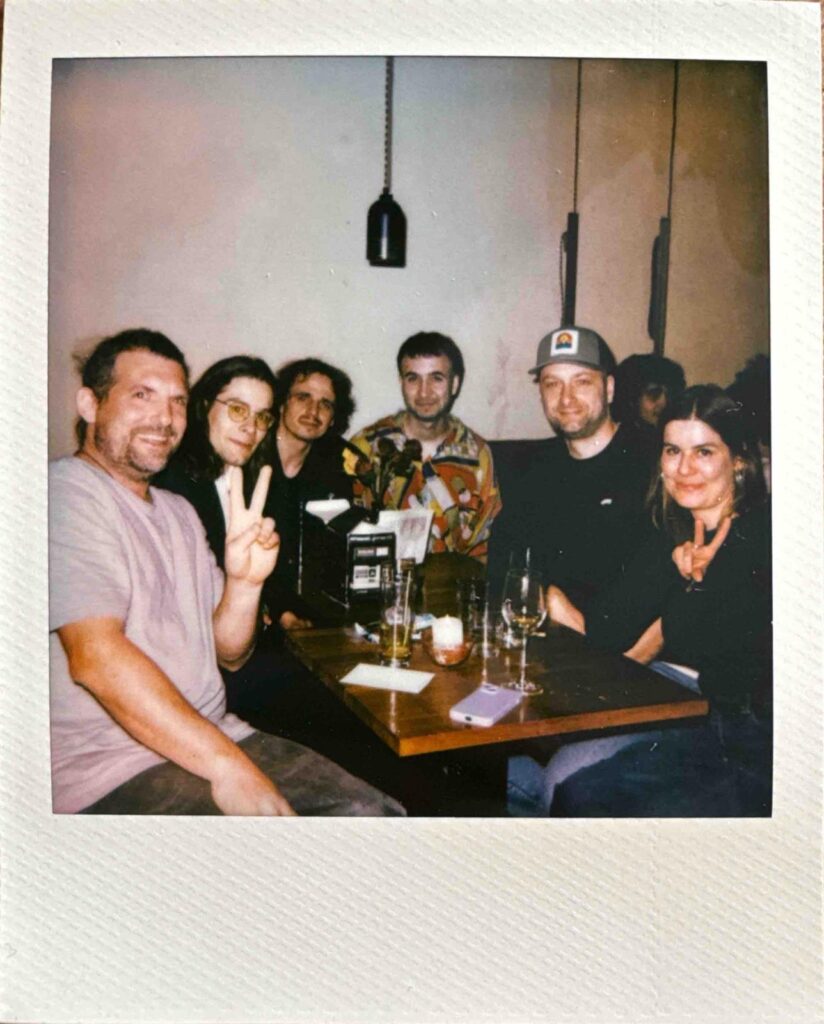
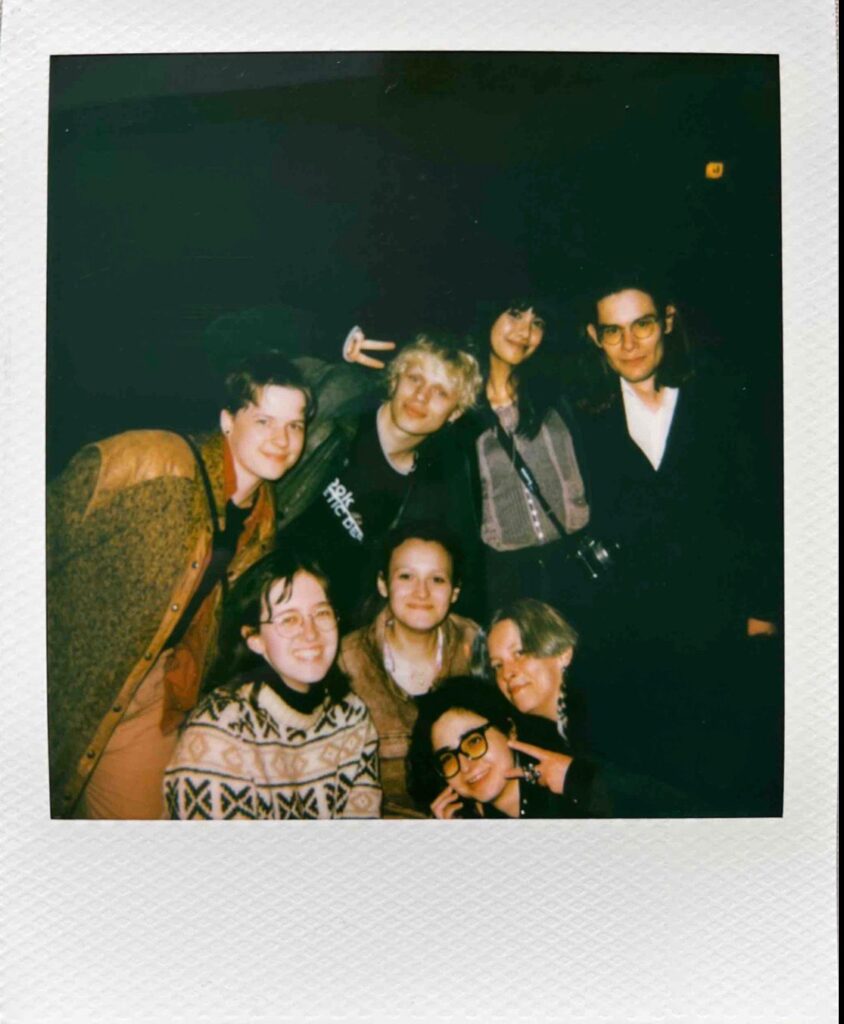
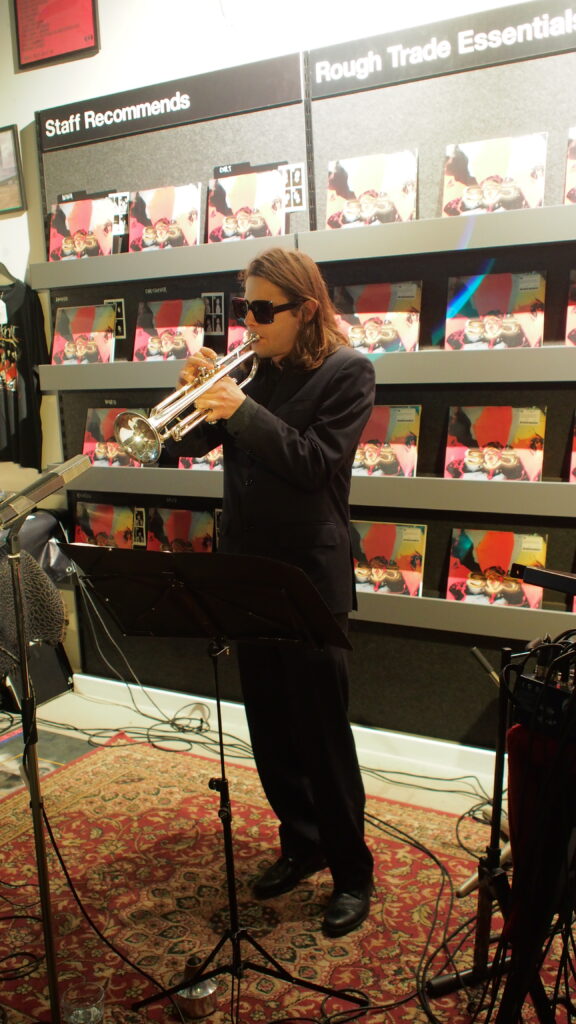
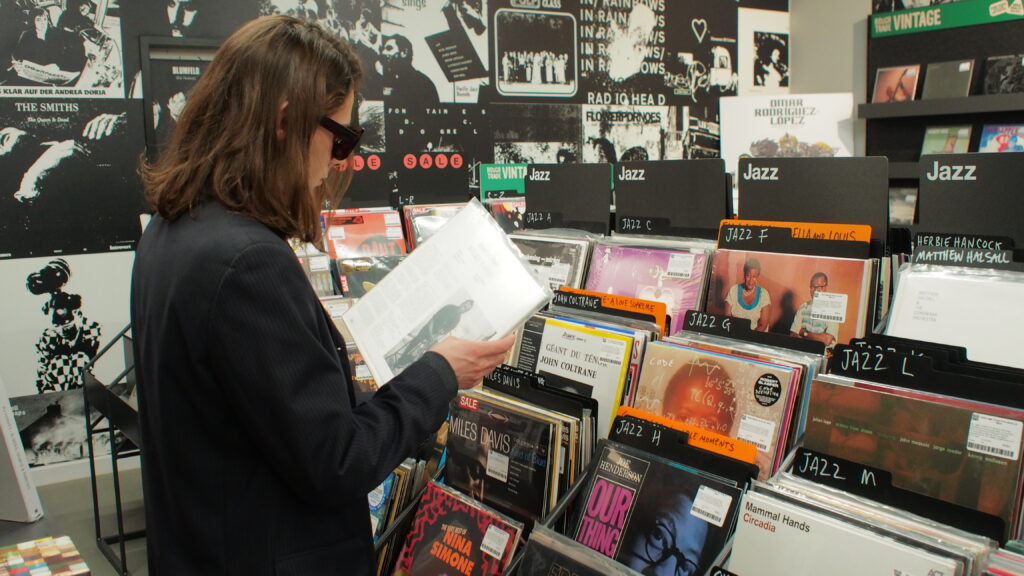
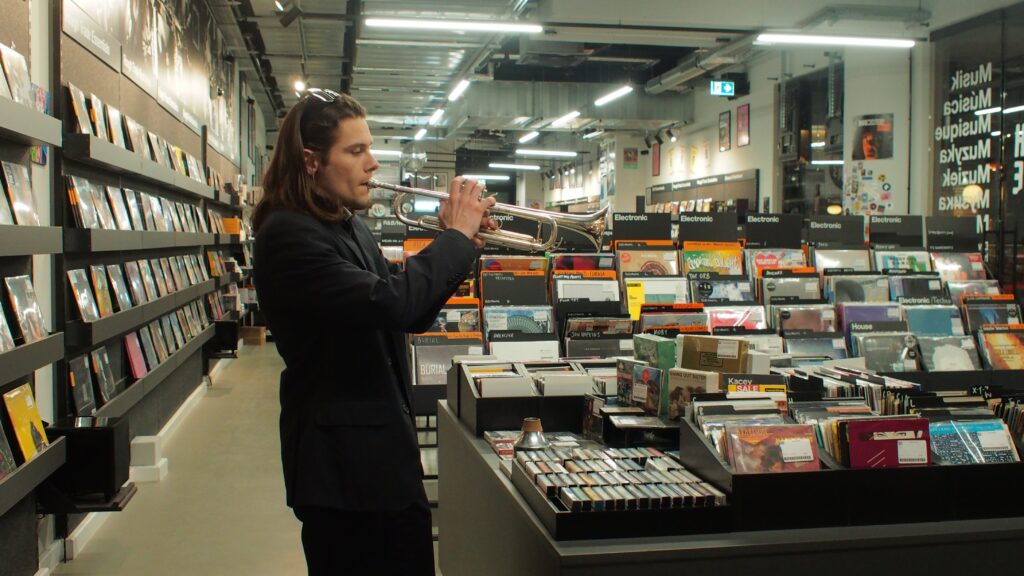
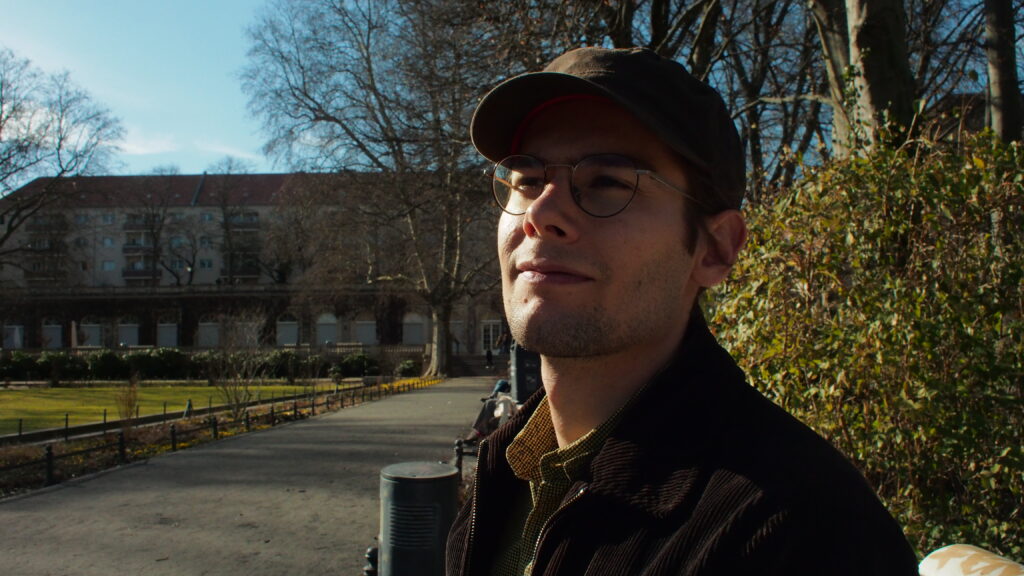
    Here are some picture to kick this blog- post off:

    I am, as you might have come to known at this point, fascinated by history, one might say, almost of any kind. While travelling to Greece, I am reading a German classic: “Die Sagen des klassischen Altertums” by Gustav Schwab. It is, as the title suggests, a collection of Ancient Greek tales, put together in great style by the German theologist. Being born in 1792, Schwab was a contemporary of Goethe.

    Speaking of Goethe, whose legacy reaches well beyond his own creation our second Gig was at Goethe Institut Athens as part of the Athens Music Week, a festival for connecting organisers, scouts and artists from all over Europe.

    Anyhow.

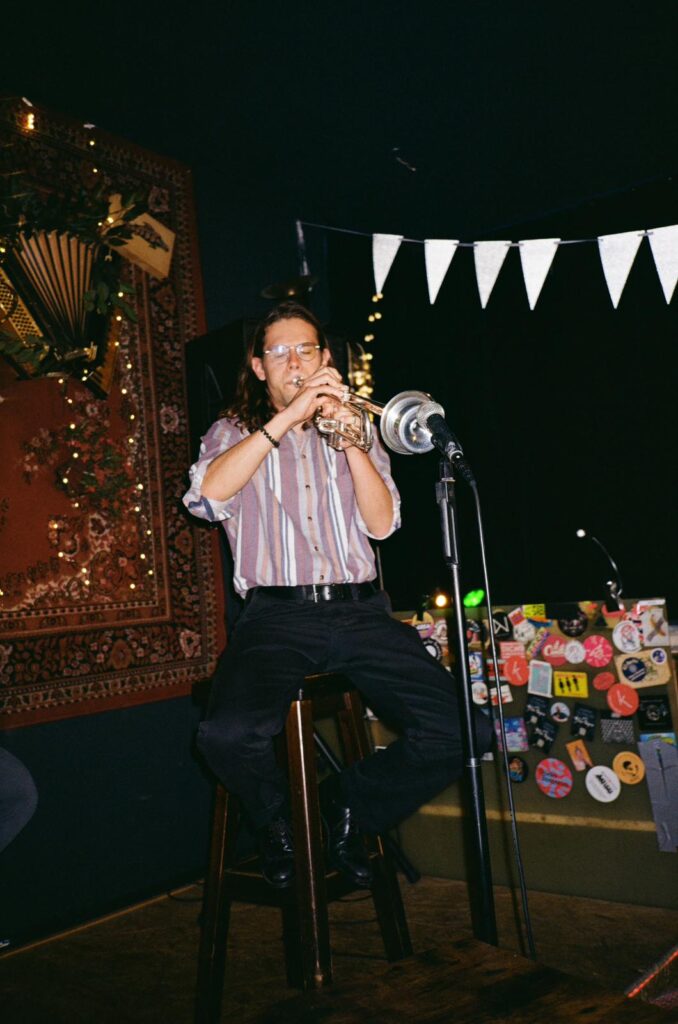
    Our first gig though was a party organised by the reflected collective. Special thanks goes to Phanos and Athia, who at the foremost fronts organised the event so well. Here are some cool shots from that gig:

    The next day we explored some ancient sites like the Parthenon and the Agora.

    Here is a fun thing I was thinking while exploring these: While here (in Greece) there developed a high culture to which we owe our highest philosophical and artistic heir, germans were basically sleeping in swamps and hunting boars (though I am sure the greeks hunted boars, too).

    I was also very thankful to be accompanied by Daniel and Mattia from 505. The vibes were always good with them. Since they are both Italian and because of my telling given name, everyone suddenly started to speak Italian with me. So you can imagine we had a lot to laugh.

    That’s it this time around!

    See you soon, with big news then.

    Best,

    Fabio

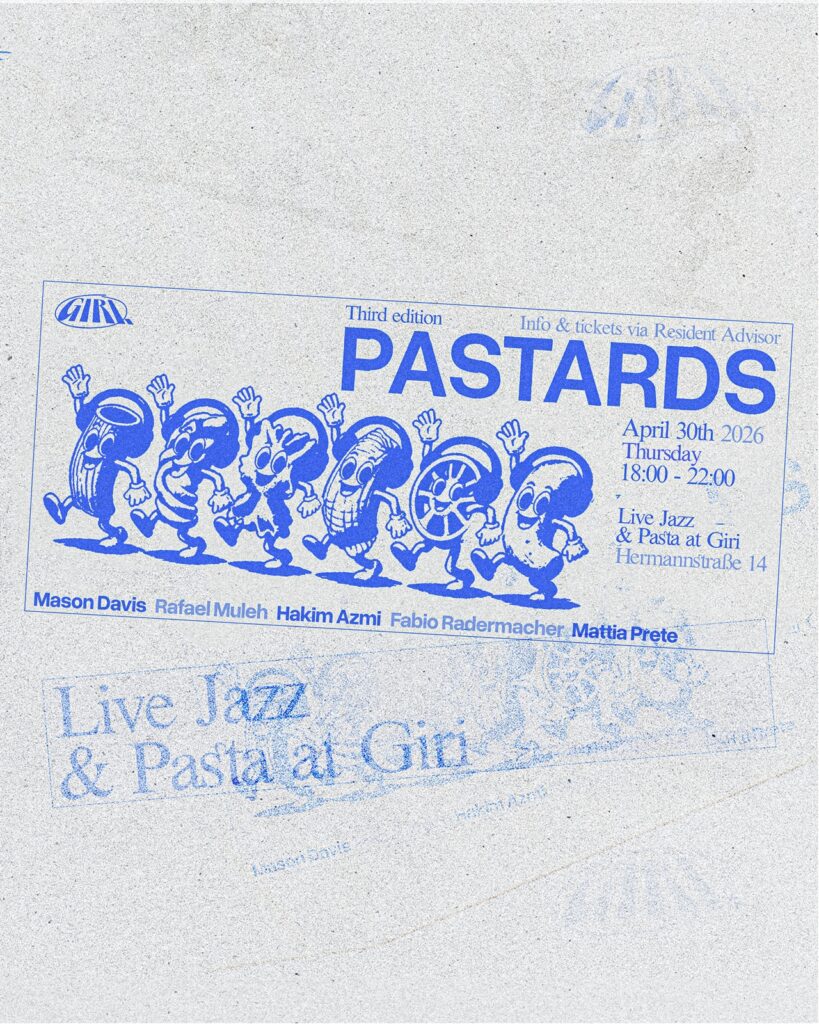
  • Make sure to come to Pastards on the 30th of April, here is the Link for reservations (Pasta and Music ticket included): https://pay.sumup.com/b2c/QAH2KUQQ

    We are also part of International Jazz Day 2026 celebration, which is really cool, as can be seen here: https://jazzday.com/listing/pastards-third-edition-live-jazz-pasta-at-giri/

    This is our text so you can get a feeling of what we are planning:

    “Pastards is a recurring event centered around live music, with a strong jazz focus, where Giri cooks and serves fresh pasta, enriched with flavors and preparations created by our in-house chef. It’s designed as a convivial experience – a moment to enjoy live music with friends, a glass in hand, in a space that invites you to stay, listen, and connect.

    The evening often begins with a vinyl selection, gradually setting the tone before moving into the live performance.

    To celebrate International Jazz Day 2026, Fabio Radermacher and the 4th Encounter will present a grooving spectacle: from Herbie Hancock to Roy Hargrove and beyond. Mattia Prete, one of the finest selectors of vinyl the city has to offer, will set the tone for the night with some gems. The ticket includes both the concert and a serving of pasta – no pasta no festa Baci”

    Following is this weeks Blog-Entry:

    Sometimes you have to operate with deliberation rather than charging ahead senselessly. With patience.

    My sense of orientation is not fully awake yet this morning on the moving ICE, and I’m noticeably struggling to drag musical notes around on the display. So instead, I’m writing. The morning sun looks magnificent. It’s shining on the endless fields of Brandenburg.

    Right now I’m thinking about what so fascinated Stefan Zweig: the so-called monomania. That state in which a human being is completely possessed by a single idea or purpose. I’m wondering whether there have also been historical figures who achieved mastery without even a mild form of monomania. E.T.A. Hoffmann comes to mind immediately. Although he was a pioneer of Romanticism as a composer, he also became one of the most widely read authors in Europe. I’m also thinking of chess — a discipline in which you have to surrender your entire being (much like playing the trumpet) if you want to succeed.

    One might think this stems from a desire to outdo the competition, but it’s really about something deeper: the psyche must be wholly absorbed by the thing itself so that body and mind become truly capable of what we generally call art. Only when thinking, feeling, intuiting, and sensing — perhaps not in equal measure, but in a meaningful way — are all harnessed toward solving a task can an individual unfold their full creative power. If one of these main functions is missing, our work will eventually stall and won’t move forward until we take that unfamiliar step that may at first feel inadequate. For example, someone who finds it hard to set thinking aside and surrender to pure feeling will struggle, while another person may feel deeply but is unable to approach an object with logical understanding. Monomania seems to act as a kind of crutch here: by excluding all other stimuli, it inevitably forces the monomaniacal interest to claim all four basic functions for itself.

    Also, I will be performing for jazz-o-tech during Athens Music Week, which I am hyped for: https://ra.co/events/2419189, as well as a performance with 505 for the local Goethe-Institut.

    That’s it for this week! I hope you are doing well.

    Talk soon,

    Fabio

  • Organizing ones own concerts involves risk, sweat and most of all friends. If it weren’t for my friends and family, I would surely be nowhere after all. 

    These „wins“ and „failures“ have taught me what everyone learns at some point: life is not designed to involve any notion of „fairness“.

    One may win by sheer luck alone, the next day loose although one worked very hard towards success.

    Like I said there is but one constant: friends and family. 

    And so this article is dedicated to them, the most important persons in any ones life. 

    What we have, we take for granted, and it takes true effort to sit down and think. Think, not only what they gave or are giving to you, but also what hole you would leave, if you left. We often underestimate that. 

    The first instrument in any musicians life is probably the voice. I was more of a whistler though. I remember going on hikes with my grandparents or parents, and how I would just whistle weird jazz lines for hours (sounds like I made it up but its true). 

    What comes next is either drums or the flute, cause these are easily available and fun to learn. Maybe a small xylophone could also inspire some early practice. 

    The point is: the circumstances we grow up in greatly shape us. 

    But after we may have been cared for well, or may not have been, there is but one deciding factor that sets us up for failure or for success in later life: conscientiousness. 

    The Merriam-Webster dictionary give us the following definition: „(to)exercising attentive care to avoid errors or omissions : concerned with doing something correctly“. It also says: „governed by or conforming to the dictates of conscience“

    Surely, it is not the only factor, but a large factor. But where do we learn to be conscientious? 

    A brief look at the most popular articles on the topic would tell you that not only they all struggle to define what conscientiousness is, but also they wiggle themselves around by an amalgamation of adjectives: „long-term“, „motivated“, „focused“.

    In my opinion, this is what they are afraid to voice, because it sounds outdated: Being conscientious involves acting by a higher moral code and it involves having a work ethic.

    It involves ordering things in a hierarchy of value.

    To me, my friends and family are very high up in that hierarchy. My trumpet career is important, too of course, but not as important.

    Health is a big one, too. 

    The point: Success (personally and impersonally defined) is in your hands, determined by how true you can be to yourself and your loved ones. 

    How to develop conscientiousness: First, think what is important to you. Second, act accordingly. 

    This philosophical sidetrack gives me the opportunity to thank everyone who came around (friends & family) the second “Utopie in Blue” Edition.

    I leave here also a little edit from some moments of the concert:

    The next semester starts now for me, and I am pretty excited about the new opportunities for learning and collaboration that may await.

    See you around,

    Fabio

  • DuoPeregrinación

    This collaboration between Augusto Sinesi and Fabio Radermacher is a spiritual quest about the longing to discover a world that is inherently meaningful. Musical patterns, harmonic changes, rythms become means to an end. This end is a weighing up of ideas, a holding back and going forth, a condesing and expanding. Ultimately, it is a deep conversation of two musical minds.

    Above you can read the short description which obviously would mark the goal of our concert evening on the 13.03.26 in Café Utopie (Jonasstraße 23, 12053 Berlin).

    You do not know what is a “Peregrinacion” or a “Peregrination”? Lets see what the AI says shall we?

    It says “noun” and adds the descriptive adjective “archaic“: “a journey, especially a long or meandering one”.

    “To peregrinate” was used in context of pilgrimage or generally lengthy, sometimes difficult journeys with a good deal of adventure.

    It is, of course, the musically journey one may embark upon throughout their life, or simply the adventure of beginning anew life in a foreign city.

    It is a journey without a clear objective, where detours are part of the calculation.

    We hope you can feel some of your own “peregrinations” while you listen to us telling a story of our own, I know it sounds ambitious, but we want to do that through guitar and trumpet :).

    The Gig with 505_theband on Friday, 27.02.26

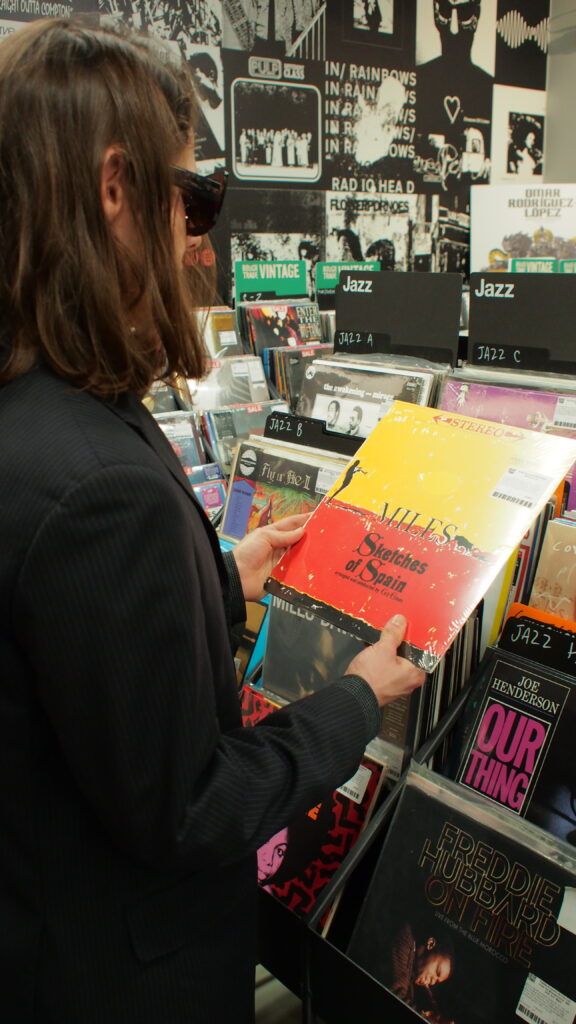
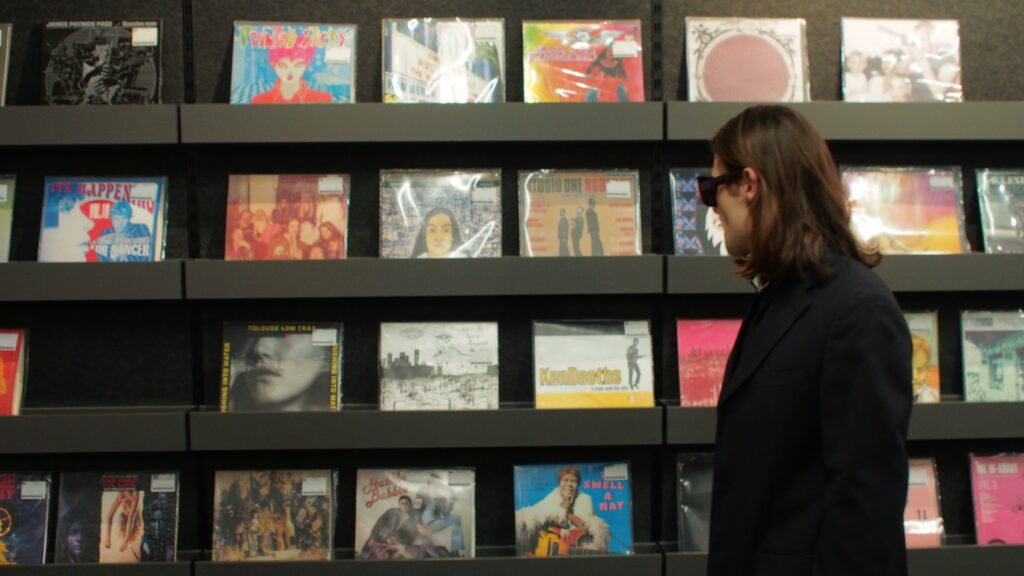
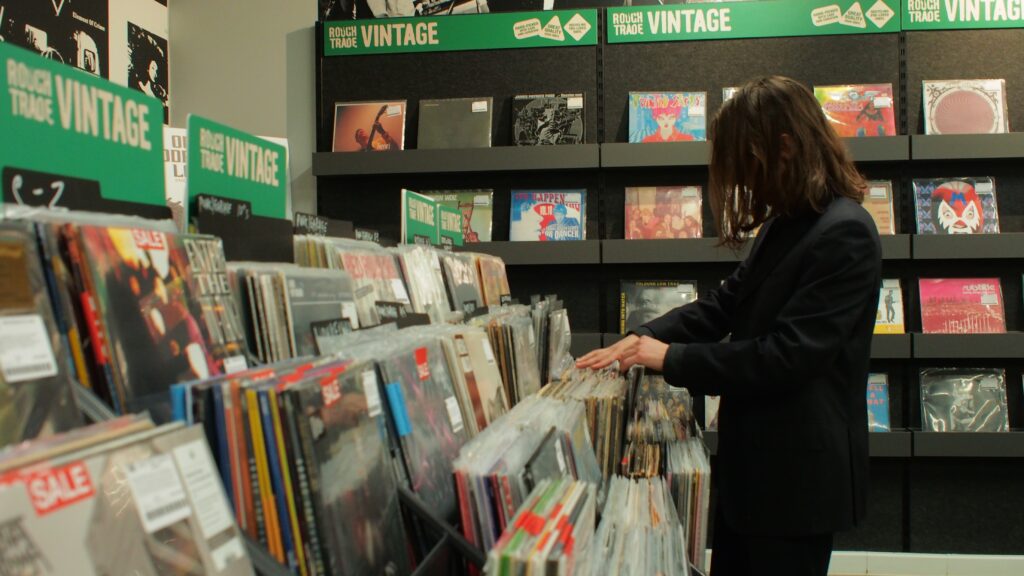
    Apart from the fun of doing a “photo shooting” in a record store, more importantly, I got to venture into new musical territory!

    My friends from 505 did release their debut album, and it was a special pleasure to support them in this endeavour.

    The band consists of Daniel Calvi on guitar and synth plus Mattia Prete on synthbass and electronics / beats. Honestly, I with my trumpet have an easy job with all these effects on my horn. Then again, this may be what also makes it extraordinarily difficult. It is easy to do too much. After all I still need a lot of endurance to get through the set. I push the sound of the trumpet to its limits to match the piercing quality of the synths.

    In my teenage years I have been trying hard to be an electronic music producer. I ditched that for my love of acoustic music and the trumpet. But somehow its fun to get back to the “old” new style, all the while learning new things about my playing.

    Anyhow. Please go listen to their debut album “True at first Light”, should be out on all platforms. (Or listen to their LP in rough trade record store)

    The next Connection 44 Podcast is on its way

    Luca Curcio was a great guest: we chatted about his debut album “la Bomba”, nerded out some questions on polyrhythms and ventured into other small interesting ways of his musical life.

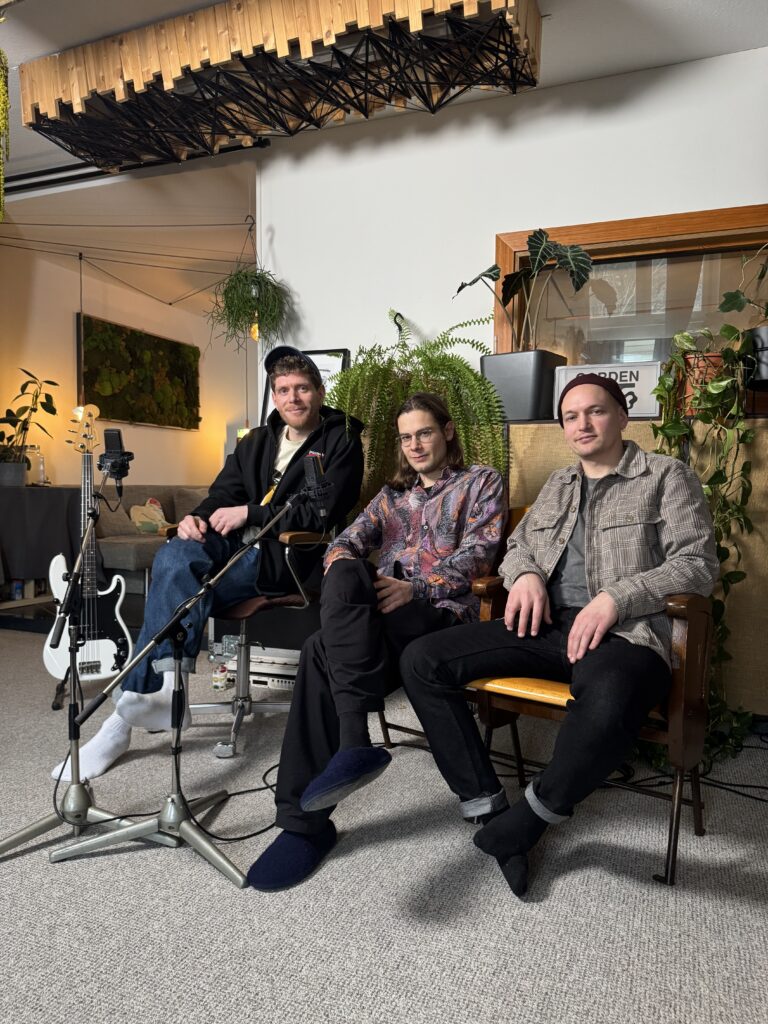
    Big thanks, as always also to my splendid production team behind the camera, with Daniel from Garden505 Studio and my girlfriend, Maia.

    Sometimes I feel like they have more work with this podcast than me, I do only the talking, although that’s a big ONLY. Haha.

    Closing this picturesque post, here is one more:

    OLYMPUS DIGITAL CAMERA

    And now please go an enjoy the good weather.

    Cheers,

    Fabio

  • Instead of indulging in the metaphysical aspects of artistry, I will try to, despite a field of mind of this magnitude, keep this article practical. Many have been wondering about the purpose, goal, becoming of art. I am wondering, too, still. Nevertheless, I want to point out that art mostly speaks in images. That is true for music also, only, that these are “images within sound”. It is true also about most writing. It is the shape and the form, that the character and its story make infold, in an imaginary realm.

    Thus (or so it appears to me), creating art is always carving. Most of the time even, its like carving a piece out of your own flesh and bones. After all, a creative act is an act of birthing. And yet a birth has to be shown to me, that passes by without a great deal of pain. Sometimes it is only through unbearable pain even, that something new is born into this world.

    Art seems also to have something to do with beauty. A beauty often, that both encompasses pain and something like a pinnacle of being itself, drawing from external as well as from internal (mental) imagery. It is as of beauty was hung on two poles, like a stretched rubber band.

    The truth is (were I to be asked), that true art is extremely rare. Not often a Michelangelo is born.

    Personally, my best thoughts and ideas come after seemingly random, intense suffering. It is as if a dark hole would suck me in, just so (hopefully a couple of days later) to spit me out again and refresh my consciousness with this water of life, tasty and cold as if from a pond in the mountains.

    Viewed in this way, art is not a choice. It is a must for the chosen ones (not to say I would count as one of them). The everyday consciousness is overcome by deeper and darker layers of the mind, and the artist is that someone who can enter in a creative union with these childish, instinctual, chaotic, sublime (whatever the contents) fields of their mind, and emerge successfully from this chaotic world, carving a new order, a new way of viewing the pinnacle, and to bring salvation to the world.

    One can have a general look at the biggest creation myths of human civilisation, and infer the same process to the growing of consciousness in individual man, retrospectively, his creative genius.

    Art is one of the most important, maybe the most important things in the universe, since it is what combines all hierarchies of value into one system, transcending consciousness and even time. After all, the ultimate creator is God himself.

    Art is also the process by which the old hierarchy is being “updated”. Without this update society’s tend towards tyranny, domination and degradation. Just a brief look at the history of medieval christianity would reveal mountains of material, of how the “religious tree” fetched its roots into all aspects of life, ordering them, guarding them, creating new ways of living.

    Surely, not all of that influence was pure. Very early in its history, the church got to be like the world, and less like heaven: power games, drug and sex abuse, corruption. Nevertheless, we can not underestimated the importance of the religious dogma for the individual person, that got to experience the development of its own consciousness through the sense of christian symbolism, and was shaped by this holy symbolism.

    So is art possible without suffering? Definitely not. At least not the kind that brings salvation.

    And do we not, knowingly or not, aspire to live in a better future for our children (or the coming generations)?

    If not, our hearts have becoming hardened and corrupted.

    At least, that’s what I am thinking.
  • How did the idea of starting this blog come about? 

    Out of sheer frustration. Honestly. I spent so much time on the train, that it was really frustrating to me that I couldn’t practice (the morning is usually my most productive time where I would tackle difficulties on my instrument). So I was thinking: I needed something (cause blowing my trumpet in the train would not exactly win me friends).

    Anyway.

    On the horizon: LP Recordings with the HMT-Bigband, the next “Utopie in Blue” Edition is under its way, and a record release concert in rough trade Berlin with 505_theband. (Here the Link to the rough trade concert); https://dice.fm/event/q27epa-505-true-at-first-light-in-store-gig-signing-27th-feb-rough-trade-berlin-berlin-tickets?lng=en)

    Today, I want to do a bit of recycling, and introduce you to a small piece I wrote a while ago:

    “Music is when, in a playful manner, rhythmic and melodic patterns fall into harmonious order. In the improvised music we do, this happens spontaneously, but within the confines of a musical form. In the social world, a bar is like that musical form. The interactions arise spontaneously, but a certain kind people are attracted to a bar. That means the conversations probably revolve around certain ideas and things, and that predictability makes the atmosphere both compelling and inviting. From a broader perspective, it can be viewed as an interplay and mingling between chaos and order. There are restrictions, but also a lot of possibility for adventure.”

    A very broad metaphor indeed, but nevertheless fitting.

    I wrote it to set the stage for setting up an event at a venue, and to propose the name “Chaos and Order” for the event (caos e ordine because it was an Italian venue).

    I like the sentence I wrote in the end, that is summing everything up: “It could be a playful garden where music, food and people merge into one experience.”

    When one feels playful, that is something like an optimised state, also for us adults. It is that flow state that everybody is talking about. It is of course where we learn best. It might be when we play our best solos.

    That is also why it makes sense for us to go to university: It is a more secure space than the “real world” and mistakes are trivial most of the time. The best universities are the ones where discipline (which is a somewhat disagreeable form of encouragement) and opportunity collide, while leaving room for error.

    Also true is that most of us do indeed need a mentor, Beethoven after all was also talking composition lessons with Mozart. The old wise man is a reoccurring theme, and we do listen to them; Within pop music think Rick Rubin or Victor Wooten’s book “The Music Lesson”. We perceive the world in this way, the only thing we can do about it is to make it conscious to ourselves.

    In the best case scenario, our teacher or teachers develop to be a role model for us. Even better if we do not lose our own way in the process, but that the work on the instrument is a guidance and challenge to us that we take on wholeheartedly.

    I hope that in the future these little blog posts can also offer a little guidance to whoever reads them, and that we will explore some interesting ideas in the future (I am looking forward to critique some music books here).

    Also a Podcast with Luca Curcio is coming up, looking forward to that!

    Talk soon,

    Fabio.

  • Without further to do, I would like to, if I have not done so already elsewhere, introduce you to the Podcast Episode Number 2. My guest was Adi Stoenescu, with whom I talked about the Beginnings of his musical journey, Berlin and the Connection he has made here, and a brief outlook into future projects.

    This time around it is naturally a bit of a Christmas Post.

    I recently played a Christmas Show with the IMS Leipzig. It was of special delight, not only because the arrangements were great or the event was very well organised, but because of the choir performances that, together with the large ensemble band created a very wholesome and touching atmosphere.

    I have a strong sense of peace and togetherness on Christmas. Part of why that is the case I think is my bakery job. Between raisin bread and chocolate rings I tend to have profound ideas and impactful conversations. The job is also quite an adventure with long shifts in the cold, heavy labor and stressful atmosphere. 

    But then, after endless work, it is done. A more inward time begins, a relaxed time, Christmas time. Everything is coming together on the 24th, not only every family does. 

    A small recommendation of the next days: Runnin’ Out of Fools by Aretha Franklin

    I wish you all a merry Christmas and a happy new year!

    Fabio

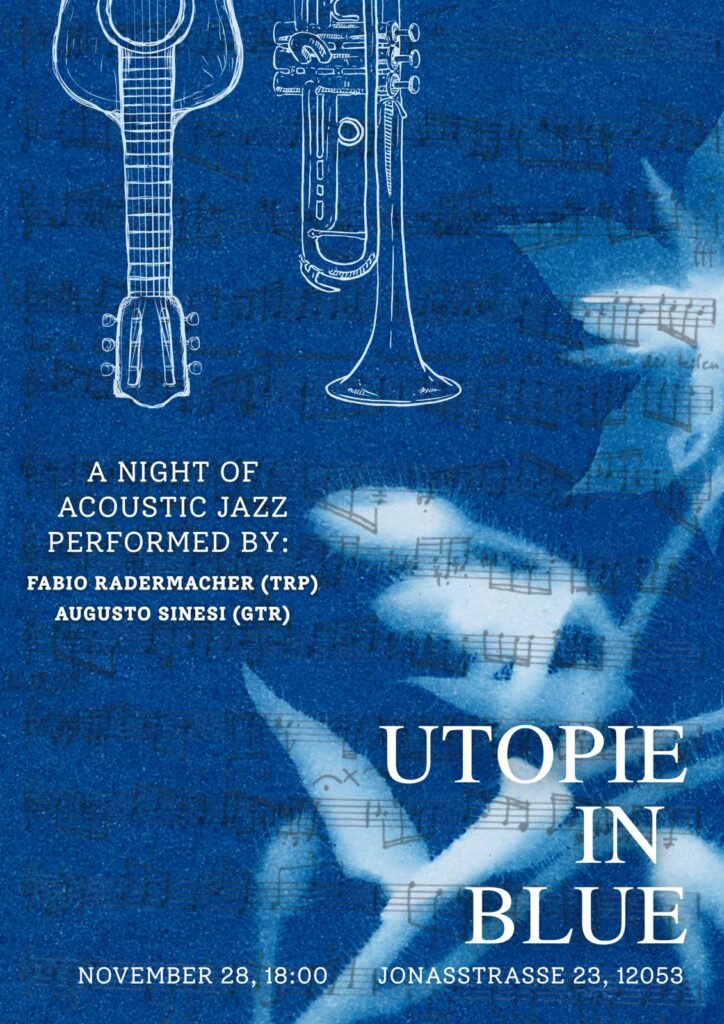
  • Firstly, I would like you to have a look at this wonderful cyanotype design that Maia did for Augusto’s and my concert. In the background you can see a sketch of mine and the flower is a lily. The concert title “utopie in blue” is kind of self explanatory. Tomorrow (28.11.25), we will play some of our own compositions and also some Brazilian jazz music.

    Sometimes I find the most interesting quotes about music in the seemingly unrelated realms, this time around, I brought in a quote from Johann Kreutzer in his commentary on St. Augustin (I put it in German first and then offer an attempt at translating it):

    “In der Analyse der Musik stößt Augustin darauf, dass Einheit und Harmonie nicht Gegensatz vergänglicher Zeitlichkeit sind, sondern gerade erst in dem und durch das Vorübergehen des Zeitlichen sich erfüllen und Sinnvoll werden”

    “Analysing music, Augustin discovers that unity and harmony are not opposites of passing temporality, precisely in and through the passing of temporal do they fulfil themselves and become meaningful.”

    I think Augustin is pointing out something worthwhile investigating here. One could easily have the opinion, that unity and harmony are very much opposites of earthly time with its never ending problems that come our way, the fact that we are ageing, and that resources are forever sparsely distributed.

    And here is something that amazes me about music: through it, the meaning of passed time, of temporality, is revealed. We might say, we even get a sense of meaning of life as it is from it. 

    Indeed there are certain fields of questions which one can always wrestle with, and the meaning of music is one of them. To understand is to embark on an adventure of conversing with oneself.

    To raise a problem, a question to be answered within yourself and genuinely sit with it, until you come up with an answer is a great art (not to say that I would be good at it).

    The message for us musicians is: You can do the “same” thing with your instrument. As practising improvisers, that is basically what we are doing everyday. Play a phrase. Sit in silence. Play an answer. 

    It may take a lot of time though, especially in the hectic everyday life we may not have the patience to do that. Personally, I become serene in a great concert hall or I may sit in a church. Being there, I stare in awe at how beautifully the light is broken through the windows, as if I was sitting under a canopy of leaves. But everyone has their own way of coming to peace, or non at all. 

    The topic of language, of question and answer, seems all over the place within music philosophy. Everybody has a different opinion which space music should rightfully occupy, and its amazing that it is still a riddle to us in this day and age.

    I like to answer the “music is a language” statement with the pun: “Well, why do we not just talk then?”. Music evolves through temporality, like a story. It is intertwined patterns, and more than that.

    For a closing of this piece of blog, I invite to listen to the following Album of the Week:

    “La Bomba” by Luca Curcio. 

    A true “jazz” record it combines many approaches into one cohesive sound language. The powerful improvisations go well together with the Innovative sound and rich rhythms.

  • Being preoccupied with moving, I wish to return to writing with full force. I return with the revelation, that it is impossible to me to write about music, without reading about it in parallel. Since I haven’t picked up a music specific book (I am only reading “A Confederacy of Dunces” by John Kennedy Toole, “The Magic Mountain (Mann), some sermons by Meister Eckhart and a little bit of Seneca), I have to resort to a recent opera visit in the Staatsoper Berlin (Roméo et Juliette by Charles Gounod) to look for inspiration. 

    Apart from the striking overture (especially the major chords in the string section sent fierce chills through my spine), now, thinking about the experience, I may make an obvious generalisation: No matter if you are a pop musician, if you are an opera singer or a jazz musician, we all are on a stage: we all are (mostly) elevated. We (the people) give artists our attention. This attention is like the vessel for our art: take it away, and even in the presence of a listener or spectator, no transformation can take place, no feelings of awe can be evoked, no soul could be moved.

    Is attention a currency then? Maybe our most valuable one. 

    Some may be experts at catching it, other draw it onto themselves like some prince or princess with what seems very little work, some say the mass would be “greedy for sensation”, and one could make a science out of it (many did). In many heads though, (talking specifically) Jazz lives as escalator music, as an “easy listening” or restaurant background noise. And there is something positive to say about this (and a lot of very negative things).

    We can be very happy it has grown a long time ago into a “language”, a vehicle of expression, a way of life by itself. In a sense to me, what Jazz is for the classical world, Alchemy was for a long time to Christianity. Alchemy, as the precursor to modern science at the times was like a… like a Recycling center (to use a modern metaphoric image). Alchemists believed that the transformation did not at all involve only the petri dish. A transformation was necessary in the adept himself, as well as in the matter he was experimenting with. Similarly, we memorise all these patterns, songs, progressions, seemingly without an end. Really we are, too, looking for a transformation of our “inner musician”.

    As experienced Jazz musicians and improvisers we literally have grown different brains than classical musicians. In our world individual rules, like the cult that was practiced around mythical heroes like Charlie Parker (I am thinking of people beginning to shoot up, since “bird does it”). But really it seems to me John Coltrane had it best in “A Love Supreme”: Music from God, to God and through God, a person’s individual revelation sealed and to be repeated forever on a LP. If we are good and practicing jazz musician, we would like to attain the “gold” like him, we ask our selves how he did it (or how others did it). This question only comes naturally, but really Coltranes way of music was simply that – Coltrane’s way – and its only through becoming a true individual, a true artist for that matter, that anyone could hope to attain a similar level of musicality.

  • In this Episode, Alejandro and me go over his new EP “Edurne”, his musical career and the Berlin life. Among it being a meaningful project, we had lots of fun during the production and editing.

    The Art of finding the middle (Part 2)

    There is a certain optimum, a middle ground. Everything that is going through a process, that is going from A to Z has it. Even as persons we have times of our life when we are most productive, most inventive. Or times in which it seems as if all the known world worked together to create our experience. Everything coming and going in waves. Cultures have their high-time, Nations, and also forms of art. Has art ever experienced such a great destruction as in the 20th century? There is a parallel in the exclamation: “Jazz was great, but you have killed it”. It was destruction of form with intent, the re-emergence of something raw and unformed. Late Coltrane. Some older colleague of mine commented: “He really means war”. A war of principles, of spirituality, of philosophy. And we are still fighting it. 

    The AI Zeitgeist

    The temporary Zeitgeist is all set on AI-Technology. The “experts” claim, that soon all music could be “manufactured” by artificial intelligence. Have you ever been at a Wagner Opera? How, of all possible worlds, am I in the one where “Parsifal” is (still) being staged? The symbolism is infinitely deep. Artificial Intelligence “knows” symbolism not. Is it capable of invoking religious feelings? Or is it too shallow? Listening in awe, when shower after shower is sent through my spine, I want to exclaim: “the music, she understands everything”. The digital age seems to have attacked music at its core, the cards are mixed a new.

    Music is in need of music 

    .Rather then lending an ear to the doomsayers, I state the above. Music is a reflection of consciousness, at least that’s what they say. But consciousness is a complex matter. We think, feel, use our intuition, or are just perceiving things. Many musicians describe themselves to be the vessel, the transmitter, the perceivers, not the players. Here is Rule Nr.1: to perceive the ultimate without intermediary structures is indistinguishable from a psychological suicide. One foot on the ground – one foot on the ultimate – that is where we function best. That is where the music is emerging in its most meaningful form. Emerging into this world.